Éphéméride Chaque jour a son histoire

Éphéméride astronomique du jour

Données astronomiques

Soleil
Lever
08:38
Coucher
17:19
Durée du jour 8h 40min (+1min 52s) Midi solaire 12:58 Crépuscule civil 08:04 — 17:53 Heure dorée 16:19 — 17:19
Lune
Dernier croissant — 12/01/2026
Dernier croissant
Illumination : 33%

Ciel à observer

En activité

Quadrantides

L'une des pluies les plus intenses de l'année, mais au maximum très bref (quelques heures). Son nom vient du Quadrant mural, une constellation aujourd'hui disparue des cartes du ciel.

Activité déclinante après le maximum de la nuit du 3 au 4 janvier · jusqu'à 110 météores par heure · radiant dans le Bouvier, regarder vers le nord-est · poussières de l'astéroïde (196256) 2003 EH1.
Prochain rendez-vous céleste : Maximum des Lyrides, le 22 avril (jusqu'à 18 météores par heure) — dans 100 jours

Image astronomique du jour

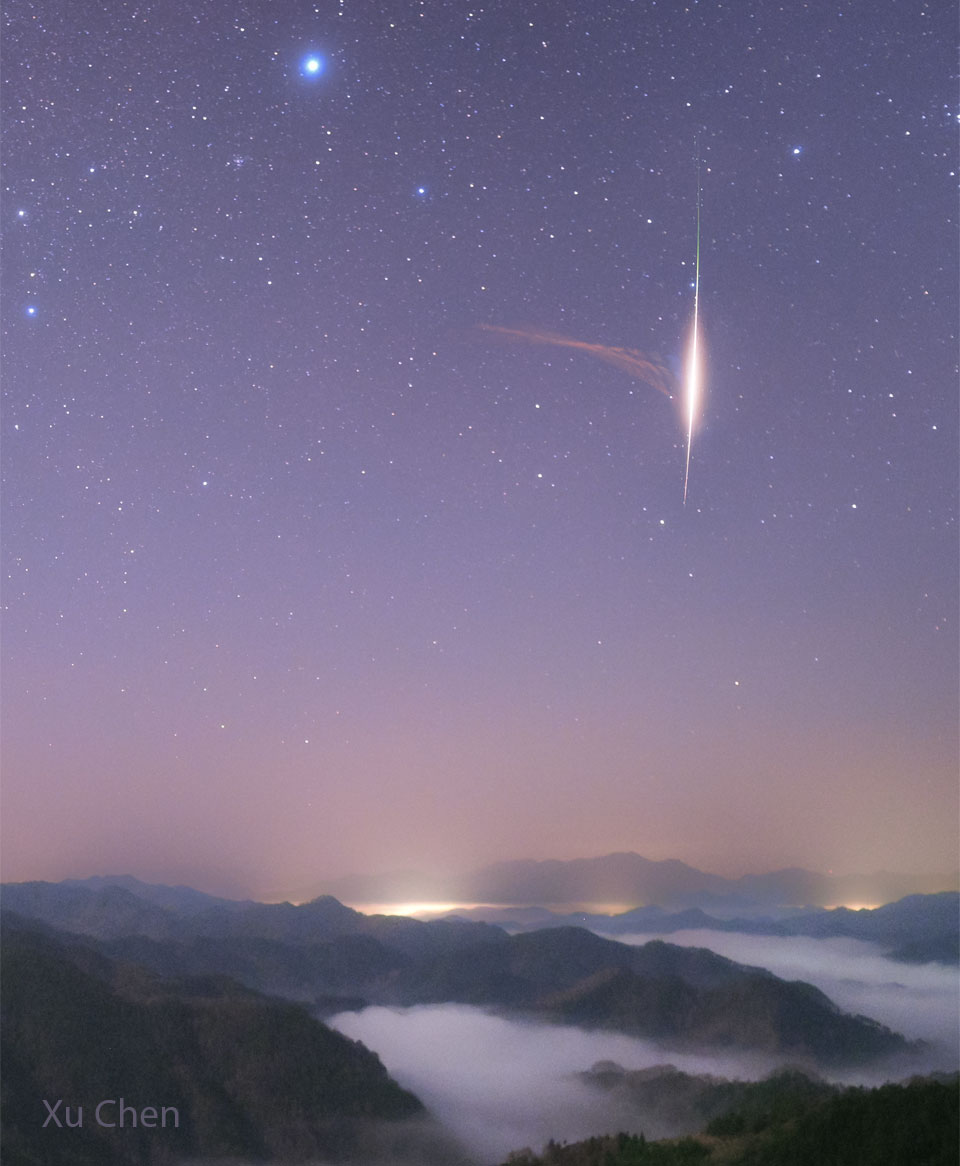
Meteor Dust

Meteor Dust

What's happening to this meteor? It is shedding its outer layers as it passes through the Earth's atmosphere and heats up. The sudden high temperatures not only cause the bright glow along the dramatic streak but also melt and vaporize the meteor's component rock and ice, creating dust. Wind in the atmosphere typically blows this dust away over the next few seconds, leaving no visible trace after only a few minutes. Much of this dust will eventually settle down to the Earth. The featured image was captured in mid-December, coincident with the Geminids meteor shower. On the upper left is Sirius, the brightest star in the night sky, while in the foreground is fog-engulfed Huangshan, the Yellow Mountains of eastern China.

Crédit : Xu Chen