Données astronomiques
Lever
07:30
Midi solaire13:02
Coucher
18:35
Gibbeuse croissante
95 % éclairée
Durée du jour
11h 4min +3min 33s
Crépuscule civil
07:00 - 19:05
Heure dorée
17:35 - 18:35
Ciel à observer
Prochain rendez-vous céleste : Maximum des Lyrides, le 22 avril (jusqu'à 18 météores par heure), dans 52 jours
Image astronomique du jour
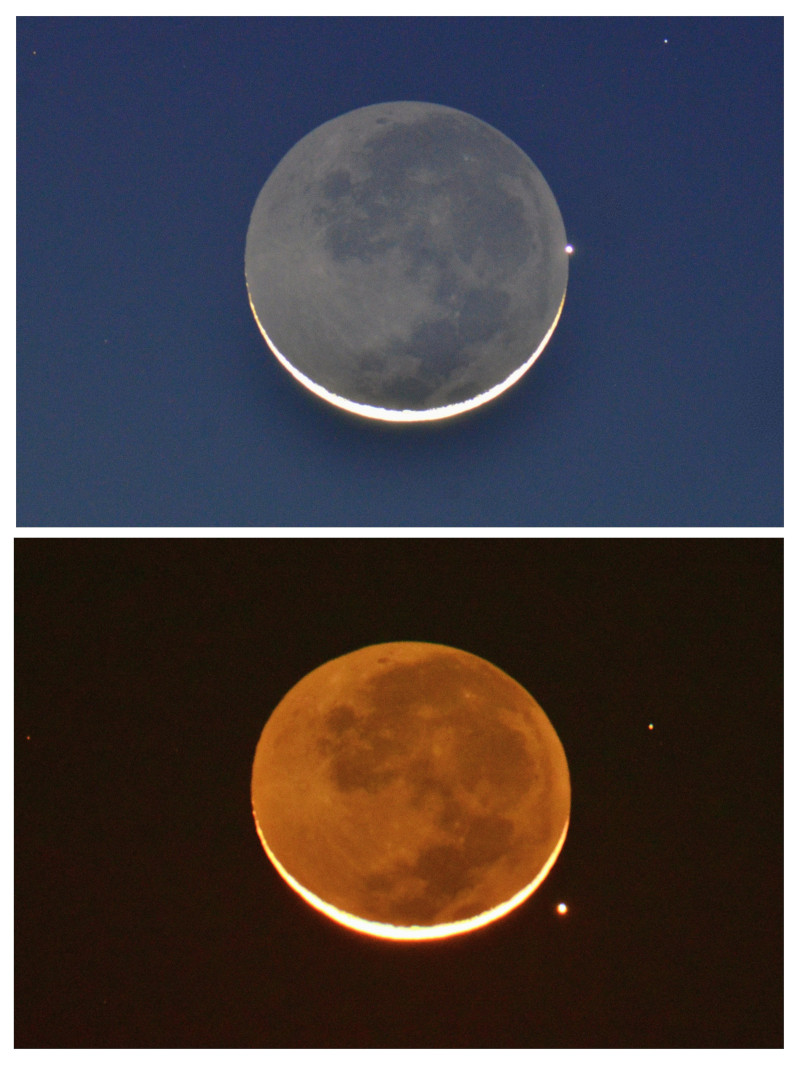
Lunar Occultation of Mercury
NASA APOD · Fabrizio Melandri
Le texte de la NASA (anglais)
Fans of the western sky after sunset have lately enjoyed this month's remarkable array of bright planets. Witnessed from some locations, on February 18 planet Mercury even appeared to slide behind the Moon, an event known as a lunar occultation. These two snapshots, taken in early evening skies show before and after telescopic views of the rare disappearance of innermost planet behind young Moon. The top panel finds bright Mercury just visible at the northern (right) edge of the earthshine-illuminated lunar disk. In the bottom panel the bright planet has emerged in darker skies beyond the Moon's sunlit crescent. As seen south of Sallisaw, Oklahoma, planet Earth, this lunar occultation of Mercury lasted only about 3 minutes (video). But you can still check out a parade of planets tonight. March 3: Total Lunar Eclipse
Lire sur apod.nasa.gov