Éphéméride Chaque jour a son histoire

Éphéméride astronomique du jour

Données astronomiques

Soleil
Lever
06:12
Coucher
21:21
Durée du jour 15h 9min (+2min 51s) Midi solaire 13:46 Crépuscule civil 05:36 — 21:57 Heure dorée 20:21 — 21:21
Lune
Dernier croissant — 11/05/2026
Dernier croissant
Illumination : 35%

Ciel à observer

En activité

Êta Aquarides

Poussières laissées par la comète de Halley, que la Terre traverse chaque printemps. Depuis la France, on l'observe bas sur l'horizon, dans la dernière heure avant l'aube.

Activité déclinante après le maximum de la nuit du 5 au 6 mai · jusqu'à 50 météores par heure · radiant dans le Verseau, regarder vers l'est, avant l'aube · poussières de la comète de Halley.
Prochain rendez-vous céleste : Maximum des Delta Aquarides, le 30 juillet (jusqu'à 25 météores par heure) — dans 80 jours

Image astronomique du jour

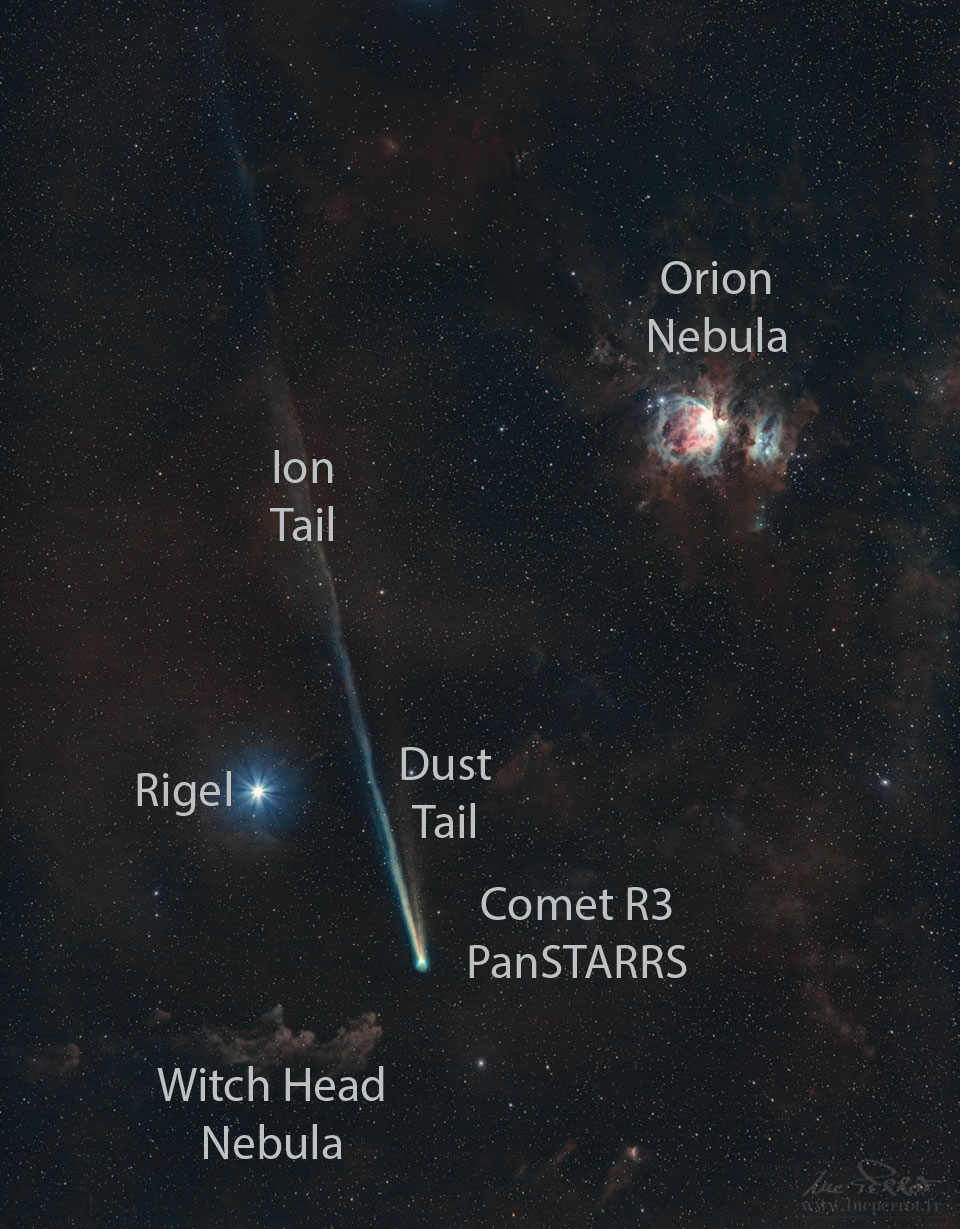
Comet R3 PanSTARRS and Orion

Comet R3 PanSTARRS and Orion

Orion never had a sword like this. As Comet C/2025 R3 (PanSTARRS) heads out of the inner Solar System, it is putting on quite a show for long exposure cameras. Currently seen toward the constellation of Orion the Hunter, the distant Orion Nebula is visible on the upper right. Comet R3 PanSTARRS is now showing two distinct tails: a short dust tail pointing toward the top of the image and a long and wavy ion tail trailing off toward the upper left. The ion tail points away from the Sun and glows blue from excited carbon monoxide. Large particles in the dust tail somewhat resist the radiation pressure that push them away from the Sun and so retain a bit of the comet's orbit. The dust tail shines by reflected sunlight. The featured image was taken a few days ago from France's Reunion Island in the southern Indian Ocean. Growing Gallery: Comet R3 PanSTARRS in 2026

Crédit : Luc Perrot (TWAN)