Éphéméride Chaque jour a son histoire

Éphéméride astronomique du jour

Données astronomiques

Lever 06:00
Midi solaire13:47
Coucher 21:33
Premier croissant, 20/05/2026
Premier croissant
18 % éclairée
Durée du jour 15h 33min +2min 28s
Crépuscule civil 05:23 - 22:10
Heure dorée 20:33 - 21:33

Ciel à observer

En activité

Êta Aquarides

Le contexte

Poussières laissées par la comète de Halley, que la Terre traverse chaque printemps. Depuis la France, on l'observe bas sur l'horizon, dans la dernière heure avant l'aube.

Activité déclinante après le maximum de la nuit du 5 au 6 mai · jusqu'à 50 météores par heure · radiant dans le Verseau, regarder vers l'est, avant l'aube · poussières de la comète de Halley.
Prochain rendez-vous céleste : Maximum des Delta Aquarides, le 30 juillet (jusqu'à 25 météores par heure), dans 71 jours

Image astronomique du jour

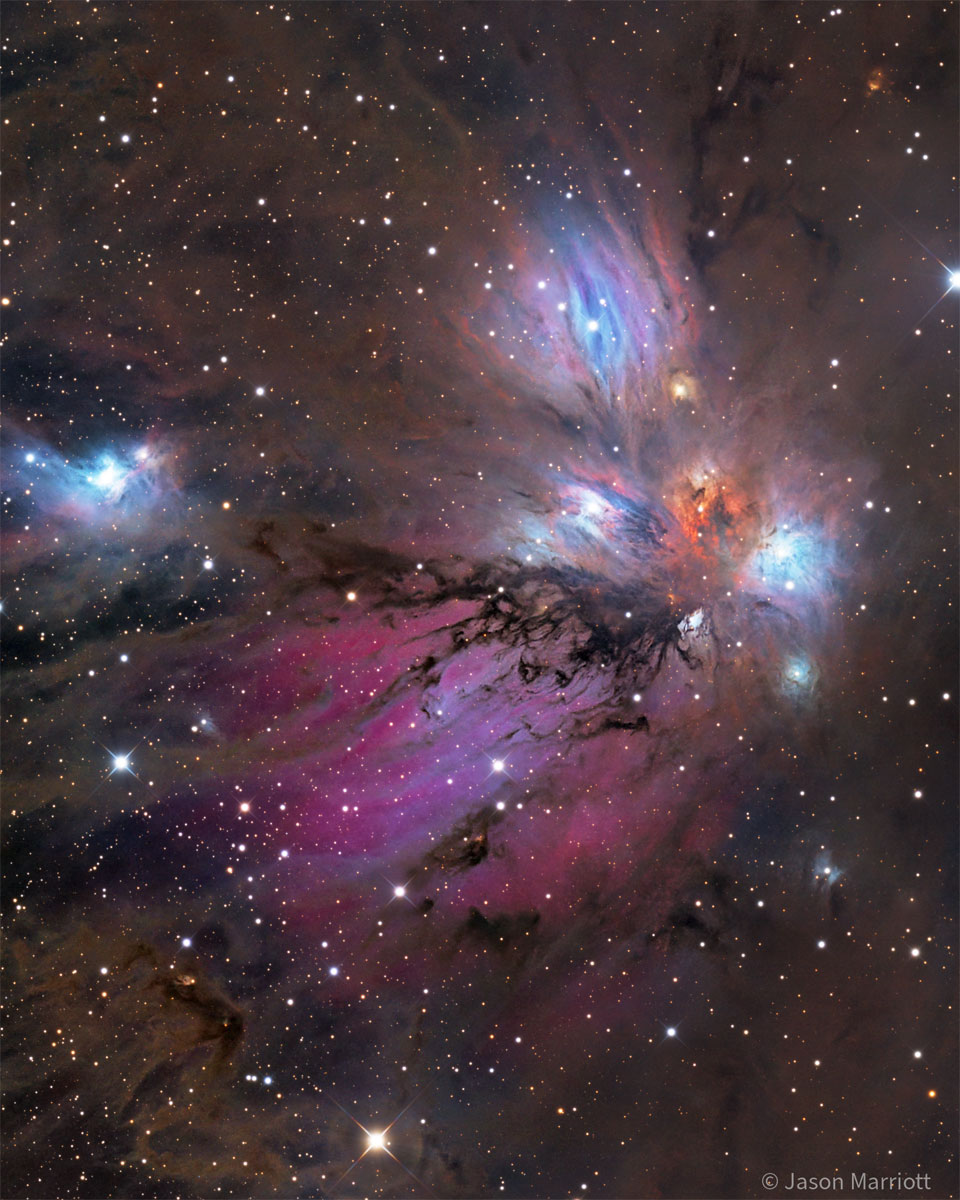
NGC 2170: The Angel Nebula

NGC 2170: The Angel Nebula

NASA APOD · Jason Marriott
Le texte de la NASA (anglais)

Is this a painting or a photograph? In this celestial abstract art composed with a cosmic brush, dusty nebula NGC 2170, also known as the Angel Nebula, shines just above the image center. Reflecting the light of nearby hot stars, NGC 2170 is joined by other bluish reflection nebulae, a red emission region, many dark absorption nebulae, and a backdrop of colorful stars. Like the common household items that abstract painters often choose for their subjects, the clouds of gas, dust, and hot stars featured here are also commonly found in a setting like this one -- a massive, star-forming molecular cloud in the constellation of the Unicorn (Monoceros). The giant molecular cloud Mon R2, is impressively close, estimated to be only 2,400 light-years or so away. At that distance, this canvas would be over 60 light-years across. Almost Hyperspace: Random APOD Generator

Lire sur apod.nasa.gov