Données astronomiques
Lever
05:56
Midi solaire13:56
Coucher
21:55
Dernier croissant
22 % éclairée
Durée du jour
15h 59min -1min 33s
Crépuscule civil
05:17 - 22:34
Heure dorée
20:55 - 21:55
Ciel à observer
Prochain rendez-vous céleste : Maximum des Delta Aquarides, le 30 juillet (jusqu'à 25 météores par heure), dans 20 jours
Image astronomique du jour
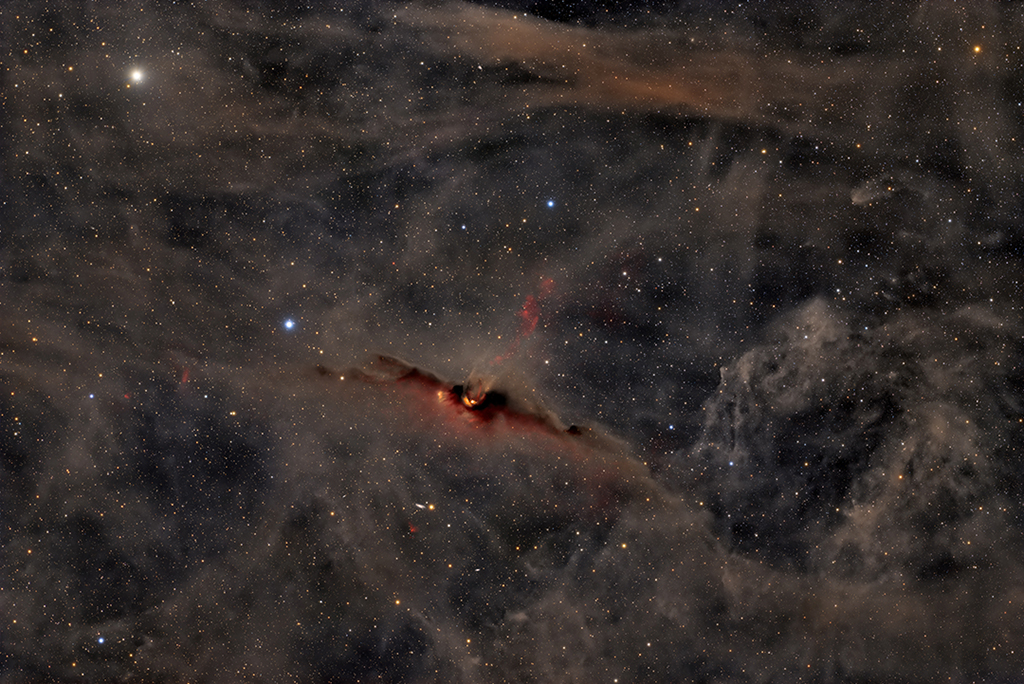
The Red Glow of the Cosmic Bat Nebula
NASA APOD · Humbert Cédric
Text:
Keighley Rockcliffe
(NASA
GSFC,
UMBC CSST,
CRESST II)
Le texte de la NASA (anglais)
This Cosmic Bat wishes you a happy Summerween! This mid-year celebration of Halloween transcends hemispheres, even though summer in the Northern hemisphere is winter in the South. Contrary to its eery aura, the Cosmic Bat Nebula (LDN 43), not to be confused with the Bat Nebula (NGC 6995), is a vibrant birthplace for stars. A bit of young starlight peeks through the dense clouds of gas and dust that make up the Cosmic Bat’s 12 lightyear wingspan. The ultraviolet light from the young stars energizes the nebula’s hydrogen gas, causing it to glow an ominous red. The jet of glowing hydrogen gas emerging from the bat’s head hints at the star formation hidden within.
Lire sur apod.nasa.gov