Éphéméride Chaque jour a son histoire

Éphéméride astronomique du jour

Données astronomiques

Soleil
Lever
05:58
Coucher
21:54
Durée du jour 15h 55min (-1min 43s) Midi solaire 13:56 Crépuscule civil 05:19 — 22:33 Heure dorée 20:54 — 21:54
Lune
Dernier croissant — 12/07/2026
Dernier croissant
Illumination : 6%

Ciel à observer

En activité

Delta Aquarides

Pluie d'été discrète mais régulière, aux météores lents. Elle se mêle aux premières Perséides à la fin juillet.

Maximum attendu la nuit du 29 au 30 juillet · jusqu'à 25 météores par heure · radiant dans le Verseau, regarder vers le sud · poussières de la comète 96P/Machholz.
Prochain rendez-vous céleste : Maximum des Perséides, le 12 août (jusqu'à 100 météores par heure) — dans 31 jours

Image astronomique du jour

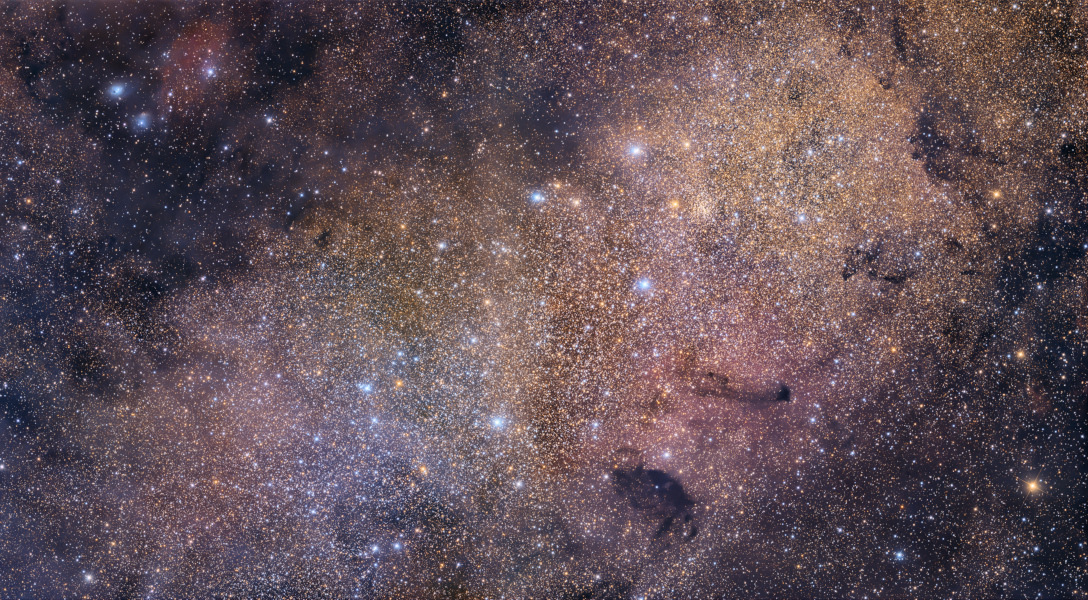
Messier 24: Sagittarius Star Cloud

Messier 24: Sagittarius Star Cloud

Unlike most entries in Charles Messier's famous catalog of deep sky objects, M24 is not a bright galaxy, star cluster, or nebula. It's a gap in nearby, obscuring interstellar dust clouds that allows a view of the distant stars in the Sagittarius spiral arm of our Milky Way galaxy. Direct your gaze through this gap with binoculars or a small telescope and you are looking through a window over 300 light-years wide at stars some 10,000 light-years or more from Earth. Sometimes called the Small Sagittarius Star Cloud, M24's luminous stars stretch across this gorgeous interstellar scene. Spanning over four full moons on the sky toward the constellation Sagittarius, the telescopic field of view includes dark markings B92 and B93 near the center of M24, along with other clouds of dust and glowing nebulae toward the center of the Milky Way.

Crédit : Chuck Ayoub