Données astronomiques
Lever
07:32
Midi solaire13:44
Coucher
19:55
Gibbeuse croissante
64 % éclairée
Durée du jour
12h 22min -3min 33s
Crépuscule civil
07:02 - 20:25
Heure dorée
18:55 - 19:55
Ciel à observer
Prochain rendez-vous céleste : Maximum des Orionides, le 21 octobre (jusqu'à 20 météores par heure), dans 31 jours
Image astronomique du jour
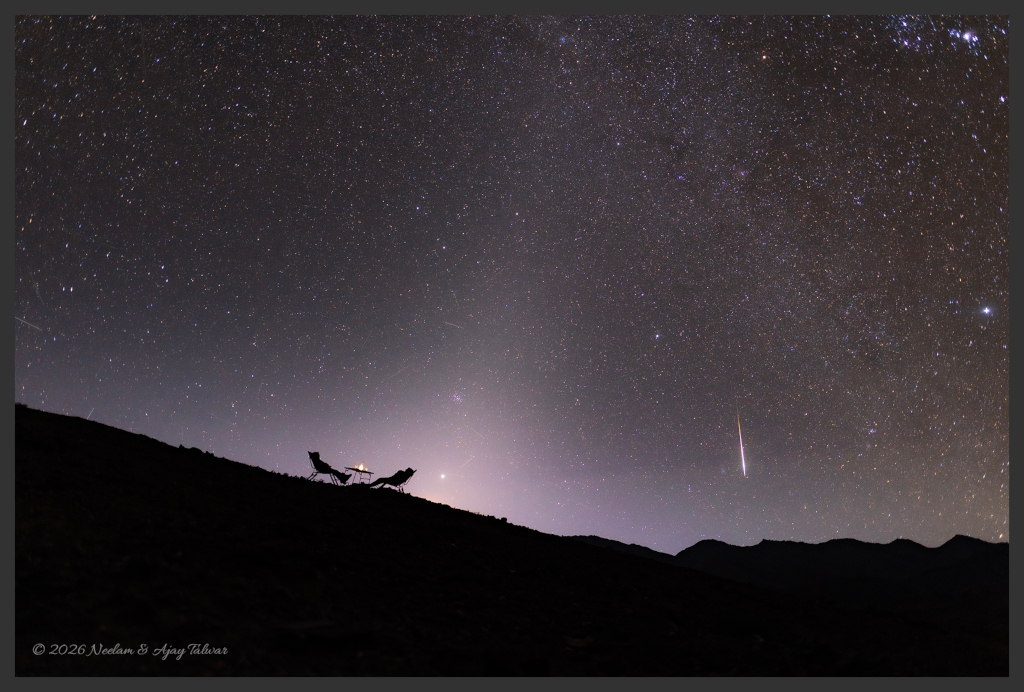
A Zodiacal Night
NASA APOD · Neelam and Ajay Talwar
Le texte de la NASA (anglais)
Also known as the false dawn, a luminous band of zodiacal light is captured in this dark night skyscape. The serene view was recorded just before the beginning of astronomical twilight during September's star party at the remote Hanle Dark Sky Reserve, Ladakh, India, planet Earth. At about 4,500 meters altitude, the dark sky reserve presents a haven for hardy stargazing and astrophotography enthusiasts. While meteors streak through the night, bright planet Jupiter appears immersed in the faint zodiacal glow near the eastern horizon. Follow the zodiacal band toward the zenith to find open star cluster M44 and a yellowish tinged planet Mars near the center of the frame. In fact, serendipitous detections of interplanetary dust by NASA's Juno spacecraft suggest Mars itself is the source of dust that back scatters sunlight and creates zodiacal light in planet Earth's night. APOD's main NASA site is moving: From apod.nasa.gov to science.nasa.gov/apod
Lire sur apod.nasa.gov