Saison
Hiver reste 24 jours
Équinoxe de printemps — 20 mars 2026
Bonne fête
Modeste, Ethelbert
Aussi Modestie, Modestine, ModestyModeste, Ethelbert, Modestie, Modestine, Modesty
Soleil · Paris
Se couche 2 min plus tard
qu'hier : 18:27, contre 18:25
Prochaine phase
Pleine lune
dans 7 jours · 3 mars
Saints du jour
Saint Modeste
évêque de Trèves et confesseur (+ v. 480)
On ne commence à parler de lui qu'à la fin du IXe siècle. L'auteur en fait un évêque de Trêves en Rhénanie quand Clovis devint roi des Francs, période très difficile pour l'évangélisation.
Sa vie en entierDonnées astronomiques
Lever
07:40
Midi solaire13:03
Coucher
18:27
Premier quartier
49 % éclairée
Durée du jour
10h 46min +3min 31s
Crépuscule civil
07:10 - 18:57
Heure dorée
17:27 - 18:27
Citation du jour
« Le travail éloigne de nous trois grands maux : l'ennui, le vice et le besoin. »
Dicton du jour
Quand saint Mathias trouve de la glace, il la casse.
L'œuvre du jour
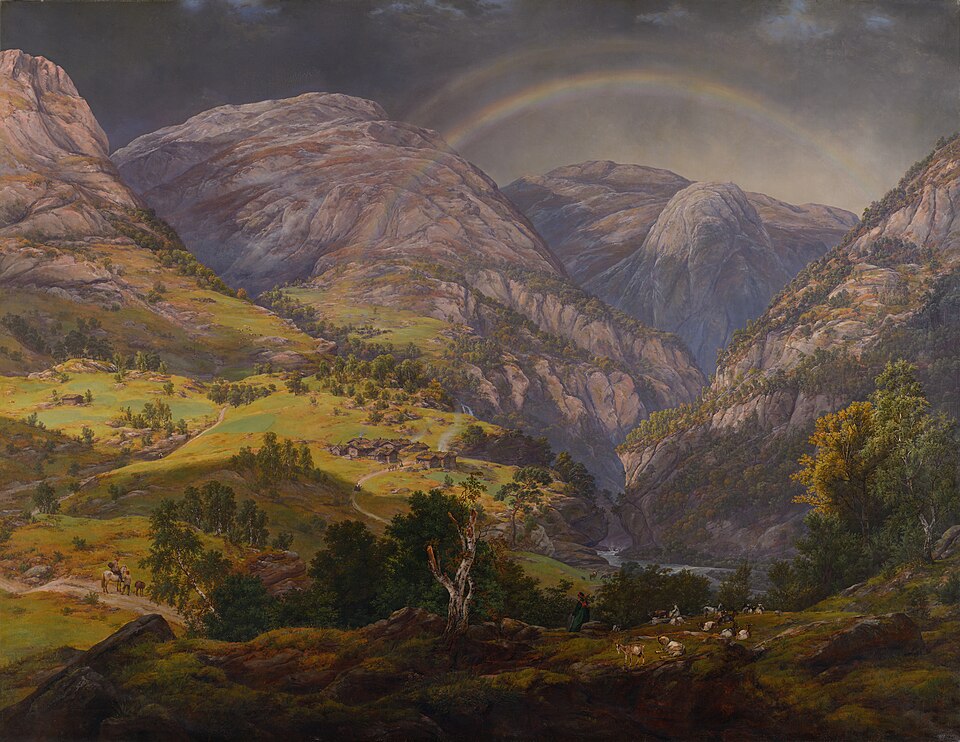
Vue de Stalheim
Naissance
Johan Christian Dahl naît le 24 février 1788.
Le contexte
Johan Christian Dahl (ou J. C. Dahl), né le 24 février 1788 à Bergen et mort le 14 octobre 1857 à Dresde, est un peintre paysagiste norvégien.
Lire sur WikipédiaTexte : Wikipédia (CC BY-SA) · Image : domaine public, Wikimedia Commons · Lire l'article
À la une il y a 100 ans

- Aujourd'hui, débat financier au sénat
- Le « comité pratique d'amélioration du service téléphonique » s'est réuni hier pour la première fois
2 autres titres
- La triomphale réception du commandant franco et de ses compagnons a rio de janeiro
- L'affaire « cady » devant les assises de melun

Ciel à observer
Prochain rendez-vous céleste : Maximum des Lyrides, le 22 avril (jusqu'à 18 météores par heure), dans 57 jours
L'invention du jour
La pelle mécanique à vapeur
Brevet accordé
Le brevet US 1 089 de la pelle mécanique à vapeur est accordé à William Otis le 24 février 1839.
Le contexte
Un excavateur ou une excavatrice est une machine destinée à réaliser une excavation.
La forme masculine « excavateur » est employée « pour désigner les gros engins de terrassement à fonctionnement continu utilisés pour les travaux à très grand rendement, par exemple dans les carrières et dans les exploitations minières. Ils sont généralement automoteurs et se déplacent au moyen de chenilles ». La forme féminine « excavatrice » est un générique parfois employé pour désigner les pelles hydrauliques et certains excavateurs légers comme la trancheuse.
Cette catégorie de machines comprend, entre autres:
une pelle mécanique hydraulique ;
une excavatrice-aspiratrice ;
une excavatrice à godets ;
une excavatrice à chaîne à godets.
Texte : Wikipédia (CC BY-SA) · Planche : dessin de brevet, domaine public · Lire l'article
Le 24 février dans l'histoire
-
1563
François Ier de Lorraine, duc de Guise (° 17 février 1520).
Décès

François de Guise, né le 17 février 1519 à Bar-le-Duc et mort le 24 février 1563 à Saint-Hilaire-Saint-Mesmin, 2e duc de Guise et 1er prince de Joinville, membre de la maison de Lorraine, est un militaire et homme d’État français du XVIe siècle des règnes de François Ier, Henri II, François II et Charles IX. C'est l'un des meilleurs généraux du roi Henri II durant les dernières guerres d'Italie. Catholique intransigeant, il est le commandant en chef des armées royales durant la première guerre de Religion (1562-1563), au cours de laquelle il trouve la mort dans une embuscade.
Lire sur Wikipédia → -
1876
Joseph Jenkins Roberts, président du Libéria (° 15 mars 1809).
Décès

Joseph Jenkins Roberts, né le 15 mars 1809 à Norfolk et mort le 24 février 1876 à Monrovia, est un marchand afro-américain qui émigre au Liberia en 1829, où il devient un homme politique réputé, actif dans l'indépendance du pays. Élu premier (1848-1856) et le septième (1872-1876) président du Libéria, il est le premier homme d'ascendance africaine à gouverner le pays, ayant déjà occupé le poste de gouverneur de 1841 à 1847. Né libre aux États-Unis, Roberts émigre jeune homme avec sa famille dans la jeune colonie ouest-africaine. Il ouvre une société de commerce à Monrovia, avant de s'engager dans la politique.
Lire sur Wikipédia → -
1885
Chester William Nimitz, amiral américain († 20 février 1966).
Naissance

Chester William Nimitz, Sr. est un militaire américain. Il a eu une carrière de sous-marinier et a eu des responsabilités d'officier d'état-major qui lui ont valu les étoiles de contre-amiral. Dans les premiers jours de la Seconde Guerre mondiale, il a été promu amiral et nommé commandant en chef de la flotte du Pacifique (CINCPAC) en décembre 1941 et commandant en chef interarmées des zones de l'océan Pacifique (CINCPOA) en avril 1942, commandements qu'il a exercés jusqu'en décembre 1945. Il a été le troisième et le plus jeune amiral de la flotte de la marine des États-Unis et a fini sa carrière comme premier chef des opérations navales de l'après-guerre.
Lire sur Wikipédia → -
1947
Catherine Lévy / Catherine Argence, journaliste française, speakerine toulousaine.
Naissance

Speakerine et speaker au masculin ou plus rarement speakerin, terme élaboré dans les années 1950 à partir du verbe anglais to speak signifiant parler désigne un animateur dont la tâche consiste à présenter les programmes de télévision aux téléspectateurs, par sa présence directe et récurrente à l'antenne. Les speakerines font partie des figures emblématiques des débuts et du succès populaire de la télé entre 1949 et les années 1990 mais sont depuis presque systématiquement remplacées par des commentaires hors champ ou des séquences d'auto-promotion. En France, elles disparaissent en 1992 sur les chaînes historiques TF1 puis en 1993 sur France 2 et France 3.
Lire sur Wikipédia → -
2023
À Djibouti, les élections législatives ont lieu afin de renouveler les 65 membres de l'Assemblée nationale. L'UMP remporte sans surprise les élections et la quasi-totalité des sièges. L'UDJ parvient à en remporter sept sur les trente cinq en jeu.

Djibouti, en forme longue la république de Djibouti est un État de la Corne de l'Afrique, situé sur la côte occidentale du golfe d'Aden. Le pays dispose aussi de 37 km de côtes sur la mer Rouge, depuis le Bab el Mandeb jusqu'à la frontière avec l'Érythrée. Il est limitrophe de la Somalie (Somaliland) au sud-est, de l'Éthiopie au sud et à l'ouest, de l'Érythrée au nord et a, au travers du détroit Bab-el-Mandeb, une frontière maritime avec le Yémen. Sa population en 2022 est estimée à environ 1 million de personnes.
Lire sur Wikipédia →
Image astronomique du jour

Pleiades: The Seven Sisters Star Cluster
NASA APOD · Kamil Fiedosiuk
Le texte de la NASA (anglais)
Have you ever seen the Pleiades star cluster? Even if you have, you probably have never seen it as large and clear as this. Perhaps the most famous star cluster on the sky, the bright stars of the Pleiades can be seen with the unaided eye even from the depths of a light-polluted city. With a long exposure from a dark location, though, the dust cloud surrounding the Pleiades star cluster becomes very evident. The featured 18-hour exposure, taken from Bory Tucholskie, Poland covers a sky area several times the size of the full moon. Also known as the Seven Sisters and M45, the Pleiades lies about 400 light years away toward the constellation of the Bull (Taurus). A common legend with a modern twist is that one of the brighter stars faded since the cluster was named, leaving only six of the sister stars visible to the unaided eye. The actual number of Pleiades stars visible, however, may be more or less than seven, depending on the darkness of the surrounding sky and the clarity of the observer's eyesight. Sky Surprise: What picture did APOD feature on your birthday? (after 1995)
Lire sur apod.nasa.gov