Saison
Printemps reste 92 jours
Solstice d'été — 21 juin 2026
Bonne fête
Clémence, Lupicin
Journée internationale pour l'élimination de la discrimination raciale · Journée internationale des forêts · Journée mondiale de la trisomie 21
Aussi Clémentia, Clémentine, MenciaClémence, Lupicin, Clémentia, Clémentine, Mencia
Soleil · Paris
Se couche 2 min plus tard
qu'hier : 19:06, contre 19:04
Prochaine phase
Premier quartier
dans 4 jours · 25 mars
Saints du jour
Bienheureuse Clémence
Religieuse bénédictine (+ 1176)
Devenue veuve du comte de Spanheim, elle se fit religieuse à l'abbaye bénédictine de Trèves en Rhénanie, où elle mourut.La Bienheureuse Clémence d'Ohenberg épousa le Comte de Spanheim (Allemagne).
Sa vie en entierDonnées astronomiques
Lever
06:49
Midi solaire12:57
Coucher
19:06
Premier croissant
8 % éclairée
Durée du jour
12h 16min +3min 37s
Crépuscule civil
06:19 - 19:35
Heure dorée
18:06 - 19:06
Citation du jour
« Tout le monde savait que c'était impossible. Il est venu un imbécile qui ne le savait pas et qui l'a fait. »
Dicton du jour
Où le vent se tourne le 21 mars, il y reste jusqu'au 21 juin.
L'œuvre du jour
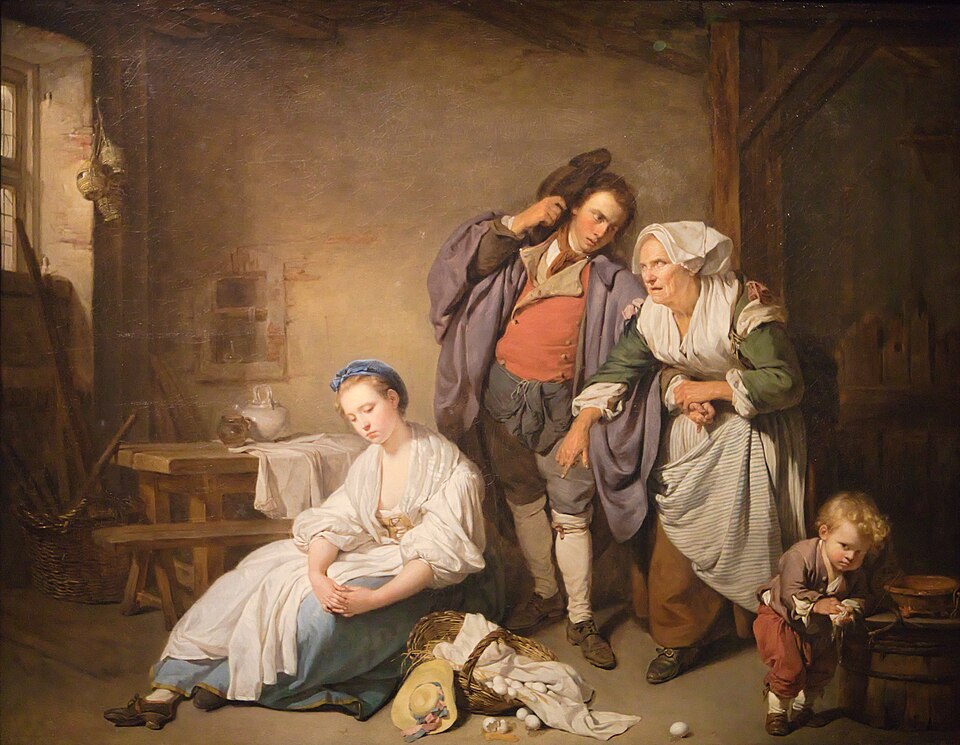
Les Œufs cassés
Disparition
Jean-Baptiste Greuze meurt le 21 mars 1805.
Le contexte
Les Œufs cassés est une peinture à l'huile sur toile réalisée par l'artiste français Jean-Baptiste Greuze en 1756 représentant une famille autour des « œufs cassés ». Elle est conservée au Metropolitan Museum of Art de New York.
Lire sur WikipédiaTexte : Wikipédia (CC BY-SA) · Image : domaine public, Wikimedia Commons · Lire l'article
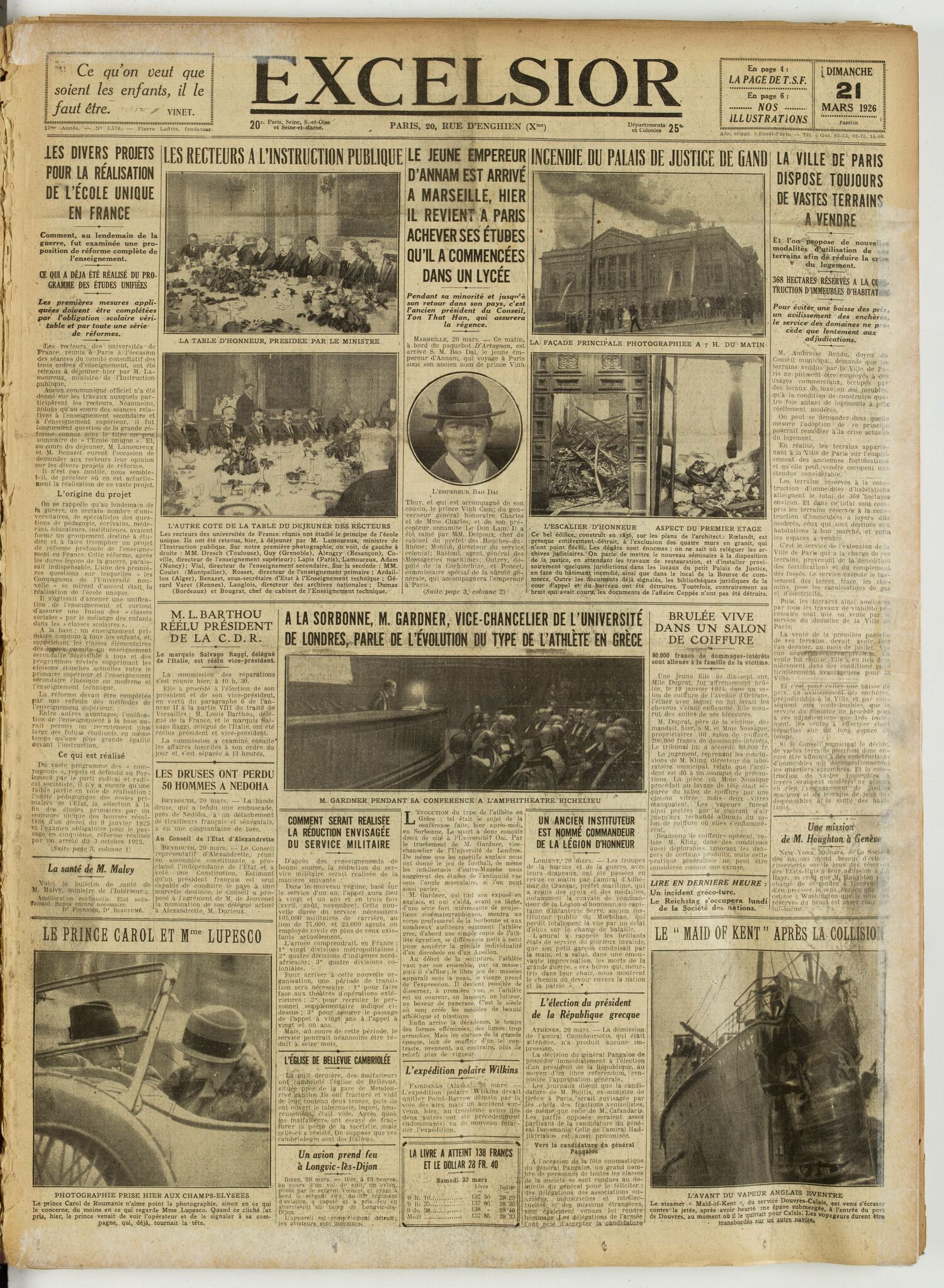
À la une il y a 100 ans
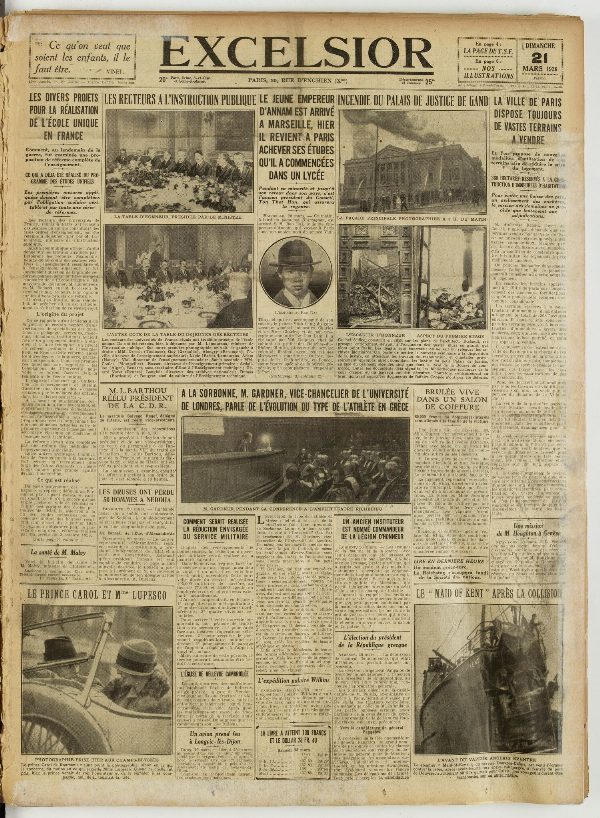
- ^ Ce qu'on veut que
Ciel à observer
Prochain rendez-vous céleste : Maximum des Lyrides, le 22 avril (jusqu'à 18 météores par heure), dans 32 jours
L'invention du jour
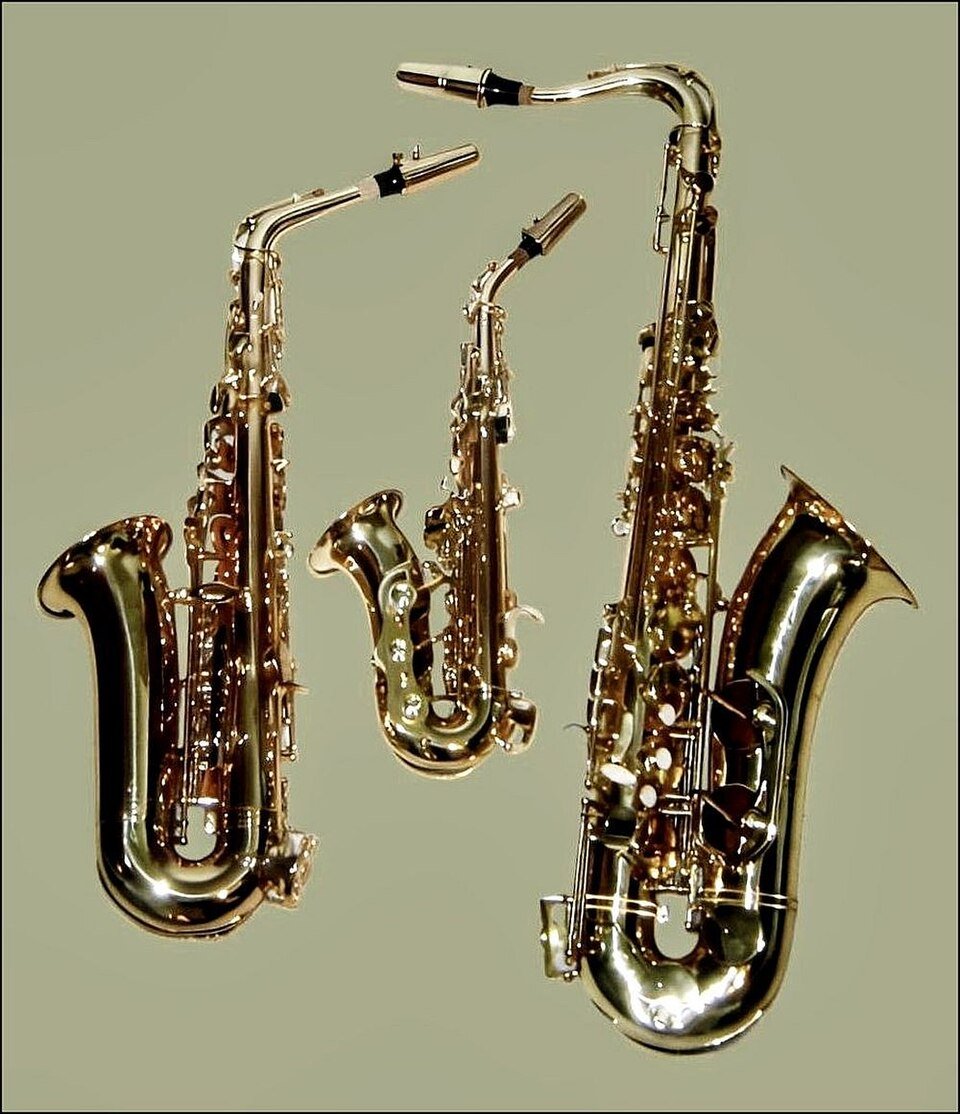
Le saxophone
Brevet déposé
Adolphe Sax dépose à Paris la demande de brevet du saxophone le 21 mars 1846.
Le contexte
Le saxophone est un instrument de musique à vent, appartenant à la famille des bois. Il a été inventé par le Belge Adolphe Sax et breveté à Paris le 21 mars 1846.
Il ne doit pas être confondu avec le saxhorn, de la famille des cuivres, mis au point, lui aussi, par Adolphe Sax. Le saxophone est généralement en laiton, bien qu'il en existe certains en cuivre, en argent, en plastique ou plaqués en or.
Texte : Wikipédia (CC BY-SA) · Planche : dessin de brevet, domaine public · Lire l'article
Le 21 mars dans l'histoire
-
1904
Jehane Benoît, gastronome, cuisinière, écrivaine et animatrice québécoise de radio et de télévision († 24 novembre 1987).
Naissance

Jehane Patenaude, dite Jehane Benoît est une gastronome, cuisinière, écrivaine, chroniqueuse à la radio et à la télévision québécoise. Célèbre pour son Encyclopédie de la cuisine canadienne (1963), vendue à environ deux millions d'exemplaires, elle est la « grande dame » de la cuisine québécoise. Dans les années 1980, elle publie une Encyclopédie de la cuisine micro-ondes en sept volumes. Toute sa vie, Jehane Benoît a mis en valeur les différentes influences culturelles de la cuisine québécoise, simplifié la transmission des recettes ancestrales, ouvert la cuisine sur l'ailleurs et l'a adapté avec l'utilisation des plus récentes innovations techniques.
Lire sur Wikipédia → -
1920
Éric Rohmer, réalisateur français († 11 janvier 2010).
Naissance

Maurice Schérer, dit Éric Rohmer [eʁik ʁomɛʁ], est un réalisateur français, né le 21 mars 1920 à Tulle (Corrèze) et mort le 11 janvier 2010 dans le 13e arrondissement de Paris. Il a réalisé vingt-trois longs métrages qui constituent une œuvre atypique et personnelle, en grande partie organisée en trois cycles : les Contes moraux, les Comédies et proverbes et les Contes des quatre saisons. Considéré, avec Jean-Luc Godard, François Truffaut, Claude Chabrol et Jacques Rivette, comme l'une des figures majeures de la Nouvelle Vague, il a obtenu en 2001 à la Mostra de Venise un Lion d'or pour l'ensemble de sa carrière.
Lire sur Wikipédia → -
1923
Nirmala Srivastava, adepte indienne de la non-violence, conceptrice du Sahaja Yoga et gourou († 23 février 2011).
Naissance

Nirmala Srivastava ou Shri Mataji Nirmala Devi est la fondatrice du mouvement Sahaja Yoga, une technique de méditation et une pratique spirituelle, qui repose sur l’expérience de l’éveil de la Kundalini — la Réalisation du Soi : « Vous ne pouvez pas connaître le sens de votre vie avant d'être connecté au pouvoir qui vous a créé. » a-t-elle dit. Elle a affirmé être née pleinement réalisée et a consacré sa vie à œuvrer pour la paix en développant et en promouvant une technique simple, maintenant popularisée dans 140 pays du monde
Lire sur Wikipédia → -
1925
Hugo Koblet, cycliste suisse, vainqueur du Tour de France en 1951 († 6 novembre 1964).
Naissance

Hugo Koblet, né le 21 mars 1925 à Zurich et mort le 6 novembre 1964 à Uster en Suisse, est un coureur cycliste suisse. Surnommé le « Pédaleur de charme », il est le premier non Italien vainqueur du Tour d'Italie en 1950. Il a également remporté le Tour de France l'année suivante. Professionnel de 1946 à 1958, il compte notamment à son palmarès trois succès dans le Tour de Suisse en 1950, 1953 et 1955, ainsi que le Tour de Romandie 1953 et un total de treize victoires d'étape dans un grand tour. Champion de Suisse sur route en 1955, Hugo Koblet est également un excellent coureur sur piste : médaillé de bronze du championnat du monde de poursuite en 1947, puis d'argent en 1951 et 1954, il obtient huit titres consécutifs de champion de Suisse de la discipline entre 1947 et 1954.
Lire sur Wikipédia → -
1960
Ayrton Senna, pilote automobile brésilien, champion du monde en 1988, 1990 et 1991 († 1er mai 1994).
Naissance

Ayrton Senna, de son nom complet Ayrton Senna da Silva, est un pilote automobile brésilien, né le 21 mars 1960 à São Paulo et mort le 1er mai 1994 à Bologne, à la suite d'un accident lors du Grand Prix de Saint-Marin. Idole au Brésil où son statut a dépassé celui de champion sportif, il est considéré comme l'un des plus grands pilotes de l'histoire de la Formule 1 dont il remporte le titre de champion du monde à trois reprises, en 1988, 1990 et 1991, gagnant 41 Grands Prix et réalisant 65 pole positions durant les onze saisons qu'il a disputées.
Lire sur Wikipédia →
Image astronomique du jour
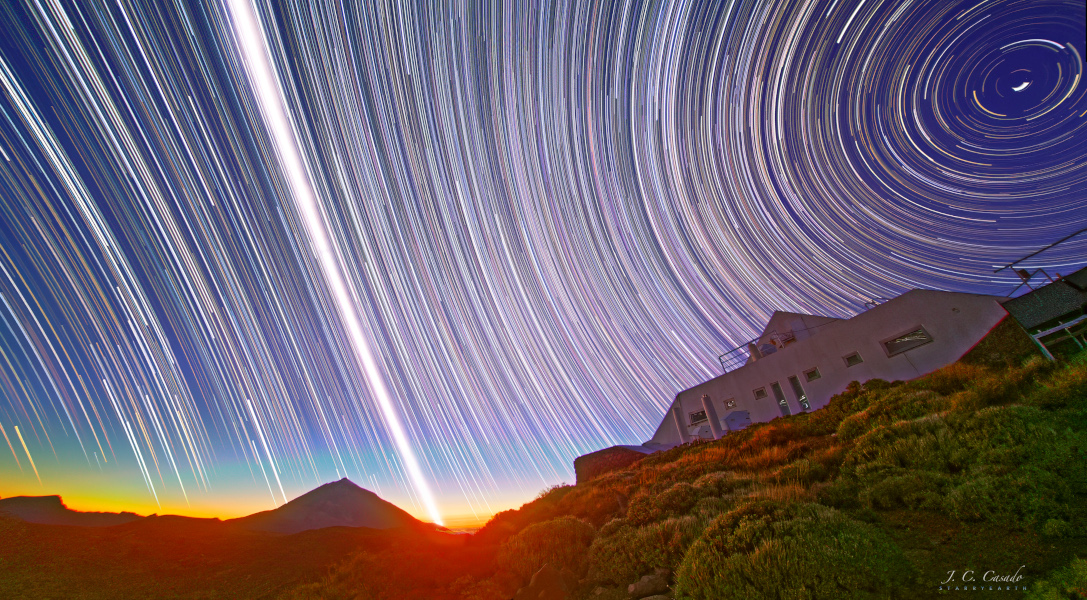
Spring Equinox at Teide Observatory
NASA APOD · Juan Carlos Casado
Le texte de la NASA (anglais)
The defining astronomical moment of the equinox today is at 14:46 UTC (March 20). That's when the Sun crosses the celestial equator moving north in its yearly journey through planet Earth's sky, marking the beginning of spring for our fair planet in the northern hemisphere and fall in the southern hemisphere. Then, day and night are nearly equal around the globe. In fact, both day and nighttime exposures from a spring equinox at the Observatorio del Teide in Tenerife, Canary Islands, Spain, are used in this composited skyscape. Over 1,000 images were taken with a fisheye lens and merged in the ambitious equinox project. The apparent motion of the Sun setting along the celestial equator on the equinox date follows the bright linear, diagonal track from the sequence of daytime exposures taken over 6 hours. After sunset, nighttime exposures recorded startrails, with the celestial equator as a linear track and concentric arcs circling the north celestial pole near Polaris at upper right and the south celestial pole beyond the lower left edge (and below the Teide horizon). The foreground includes the distant Teide volcano peak and the observatory's pyramid-shaped solar laboratory building.
Lire sur apod.nasa.gov