☀︎ Soleil · ParisSe couche 1 min plus tardqu'hier : 21:36, contre 21:34
☾ Prochaine phasePremier quartierdemain · 23 mai
Saints du jour
Saint Émile
Martyr à Carthage (+ v. 250)
Saint Caste et saint Émile qui après avoir faibli devant la torture ont repris courage pour affirmer leur foi devant les juges et furent brûlés.Illustration: Émile de Carthage, peinture de Joseph Matar (en anglais),…
Beau temps du jour sainte Emilie, donne du fruit à la folie.
L'œuvre du jour
Le Bain de l'enfant
Mary Cassatt
NaissanceMary Cassatt naît le 22 mai 1844.
Le contexte
Le Bain de l'enfant (ou Le Bain) est une peinture à l'huile sur toile réalisée en 1893 par l'artiste américaine Mary Cassatt. Le sujet et la perspective plongeante ont été inspirés par des gravures sur bois japonaises. Elle a pour sujet la dignité de la maternité dans un style similaire à celui de Edgar Degas.
L'Art Institute of Chicago a acquis l'œuvre en 1910. Depuis, l'œuvre est devenue l'une des plus populaires de ce musée.
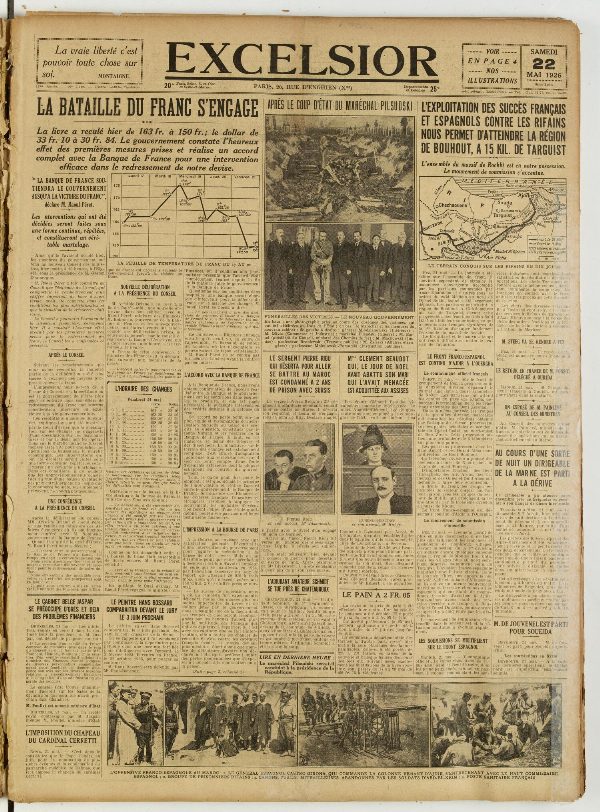
L'exploitation des succès français et espagnols contre les rifains nous permet d'atteindre la région de bouhout, a 15 kil. de targuist
1 autre titre
Après le coup d'état du maréchal pilsudski
Ciel à observer
En activité
Êta Aquarides
Le contexte
Poussières laissées par la comète de Halley, que la Terre traverse chaque printemps. Depuis la France, on l'observe bas sur l'horizon, dans la dernière heure avant l'aube.
Activité déclinante après le maximum de la nuit du 5 au 6 mai · jusqu'à 50 météores par heure · radiant dans le Verseau, regarder vers l'est, avant l'aube · poussières de la comète de Halley.
Prochain rendez-vous céleste : Maximum des Delta Aquarides, le 30 juillet (jusqu'à 25 météores par heure), dans 69 jours
L'invention du jour
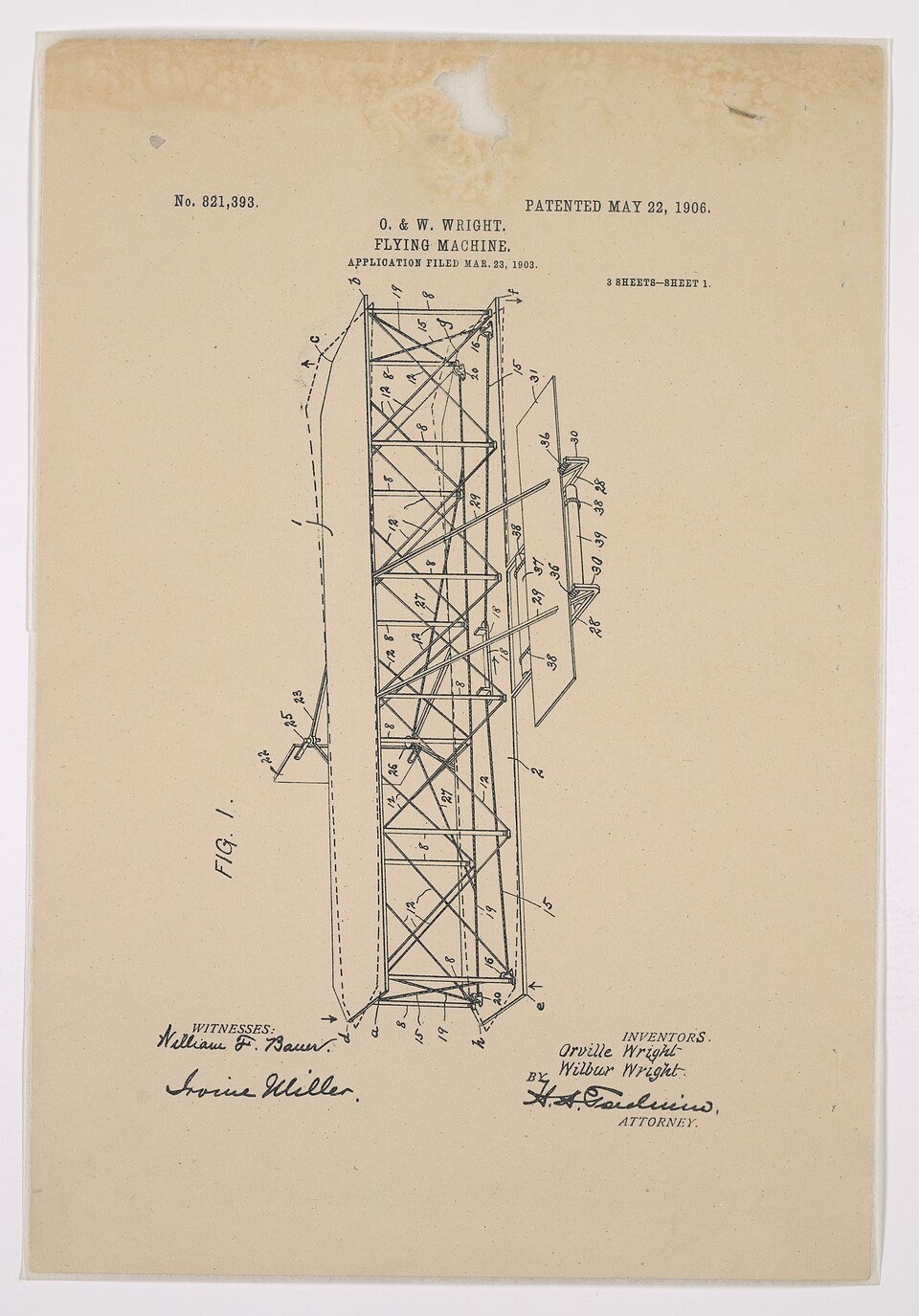
La machine volante
Orville et Wilbur Wright · brevet US821393A
Brevet accordéLe brevet US 821 393 de la « machine volante » est accordé aux frères Wright le 22 mai 1906.
Le contexte
Les frères Orville Wright (né le 19 août 1871 à Dayton et mort le 30 janvier 1948 dans la même ville) et Wilbur Wright (né le 16 avril 1867 à Millville dans l'Indiana et mort le 30 mai 1912 à Dayton) sont deux célèbres pionniers américains de l'aviation, à la fois chercheurs, ingénieurs, concepteurs, constructeurs et pilotes.
Après de nombreux vols sur planeurs entre 1900 et 1902, ils effectuent fin 1903 leurs premiers vols motorisés.
Les frères Wright se sont distingués de leurs prédécesseurs et de leurs contemporains par leur approche analytique et expérimentale du problème. Leur contribution essentielle sera d'avoir correctement analysé la mécanique de vol du virage et d'avoir réalisé, en 1902, les premiers vols contrôlés grâce au couplage de la gouverne de direction et du gauchissement (obtenu par vrillage) des ailes. Maîtrisant le pilotage, ils effectuent en 1905 les premiers vols pouvant être qualifiés de « contrôlés », de longue durée, avec des virages inclinés et non dérapés.
Texte : Wikipédia (CC BY-SA) · Planche : dessin de brevet, domaine public · Lire l'article
Le 22 mai dans l'histoire
1932
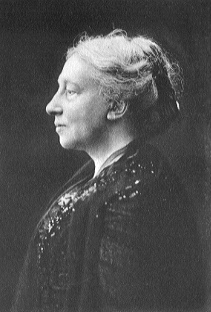
Isabella Augusta Gregory, dramaturge irlandaise (° 15 mars 1852).
Décès
Isabella Augusta Persse, dite Lady Gregory, est une dramaturge irlandaise. Elle cofonde l'Irish Literary Theatre et l'Abbey Theatre avec William Butler Yeats et d'autres artistes, tout en écrivant de nombreuses petites pièces pour ces deux institutions. Lady Gregory est aussi à l'origine d'une série de recueils de contes s'inspirant de la mythologie celtique. Née dans une classe sociale où l'identification au Royaume-Uni est forte, sa conversion au nationalisme culturel symbolise les changements vécus par son propre pays au cours de sa vie.
1942
Déclaration de guerre du Mexique, qui rejoint les Alliés.
Le Mexique, officiellement et en forme longue les États-Unis mexicains, est un pays situé dans la partie méridionale de l'Amérique du Nord. Délimité à l'est-sud-est par le Guatemala et le Belize, et au nord-nord-ouest par les États-Unis d'Amérique, il est bordé à l'est par le golfe du Mexique, à l'est-sud-est par la mer des Caraïbes, au sud-ouest par l'océan Pacifique et à l'ouest-nord-ouest par le golfe de Californie. Il se classe au
quatorzième rang mondial par sa superficie avoisinant deux millions de kilomètres carrés.
L'USS Scorpion (SSN-589) est un sous-marin nucléaire d'attaque américain de la classe Skipjack et le sixième bâtiment de l'US Navy à porter ce nom. Le Scorpion est perdu en mer le 22 mai 1968, avec 99 marins à son bord, dans des circonstances floues. L'USS Scorpion est l'un des deux sous-marins nucléaires perdus par l'US Navy, le second étant l'USS Thresher en 1963. Il est l'un des quatre sous-marins à avoir mystérieusement disparu en 1968, les autres étant le sous-marin israélien INS Dakar, le sous-marin français Minerve et le sous-marin soviétique K-129.
La Thaïlande fait face à une crise politique depuis novembre 2013. Cette crise se traduit notamment par d'importantes manifestations qui ont conduit à la dissolution du gouvernement. La Première ministre Yingluck Shinawatra est destituée par la Cour constitutionnelle le 17 mai 2014. Le 20 mai 2014, les forces armées annoncent la mise en place de la loi martiale sur tout le territoire, et par la voix du général Prayuth Chan-ocha, déclarent prendre le pouvoir deux jours plus tard, pour le dix-neuvième coup d'État militaire tenté ou réussi dans le pays depuis l'instauration de la monarchie constitutionnelle en 1932.
2020
Le loueur de véhicule Hertz employant près de 38 000 salariés se déclare en faillite au Canada et aux États-Unis.
La location de voiture courte durée (LCD) ou location de véhicule est un service proposé par une entreprise offrant aux clients la location des automobiles pour de courtes périodes pouvant aller de quelques heures à quelques semaines. Les sociétés de location sont souvent constituées de nombreuses agences locales permettant notamment aux clients de retourner leur véhicule à un endroit différent de celui de la prise en charge. Les agences de location sont situées pour la plupart dans les terminaux des aéroports, à proximité immédiate des gares et dans les centres-villes et la réservation peut se faire en ligne par l’intermédiaire d’un site web.
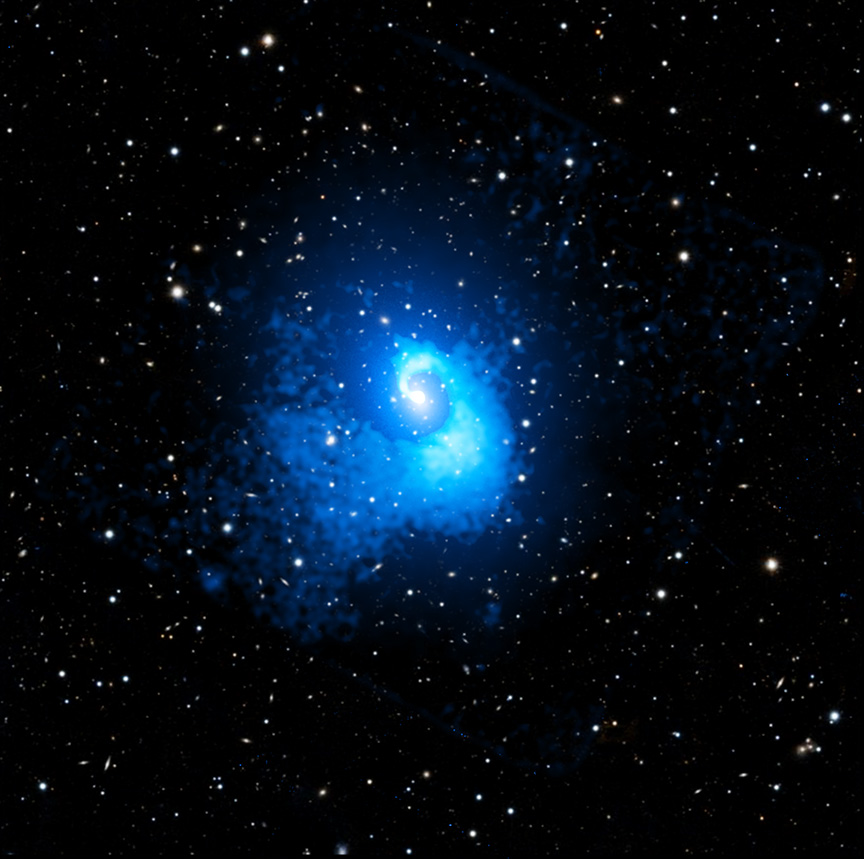
This big beautiful spiral shines in X-ray light. It is about 20 times larger than our Galaxy. It belongs to Abell 2029, a galaxy cluster one billion light-years away. (To see only the galaxies, hover your cursor over the image, or follow this link.) Galaxy clusters are the largest structures in the universe that are supported by gravity. Abell 2029 is formed by thousands of galaxies, surrounded by a huge cloud of hot gas and the equivalent of hundreds of trillions times the mass of the Sun in dark matter. The spiral is made of gas, mostly hydrogen and helium, heated to tens of millions of degrees. It was found in a recent study that used data from NASA's Chandra X-ray Observatory to show that Abell 2029 had a collision with a smaller cluster four billion years ago. The collision affected the gravitational field and caused the intracluster gas to slosh, like wine moving in a wine glass, shaping the spiral.