Données astronomiques
Lever
07:38
Midi solaire13:03
Coucher
18:28
Gibbeuse croissante
61 % éclairée
Durée du jour
10h 50min +3min 30s
Crépuscule civil
07:08 - 18:59
Heure dorée
17:28 - 18:28
Ciel à observer
Prochain rendez-vous céleste : Maximum des Lyrides, le 22 avril (jusqu'à 18 météores par heure), dans 56 jours
Image astronomique du jour
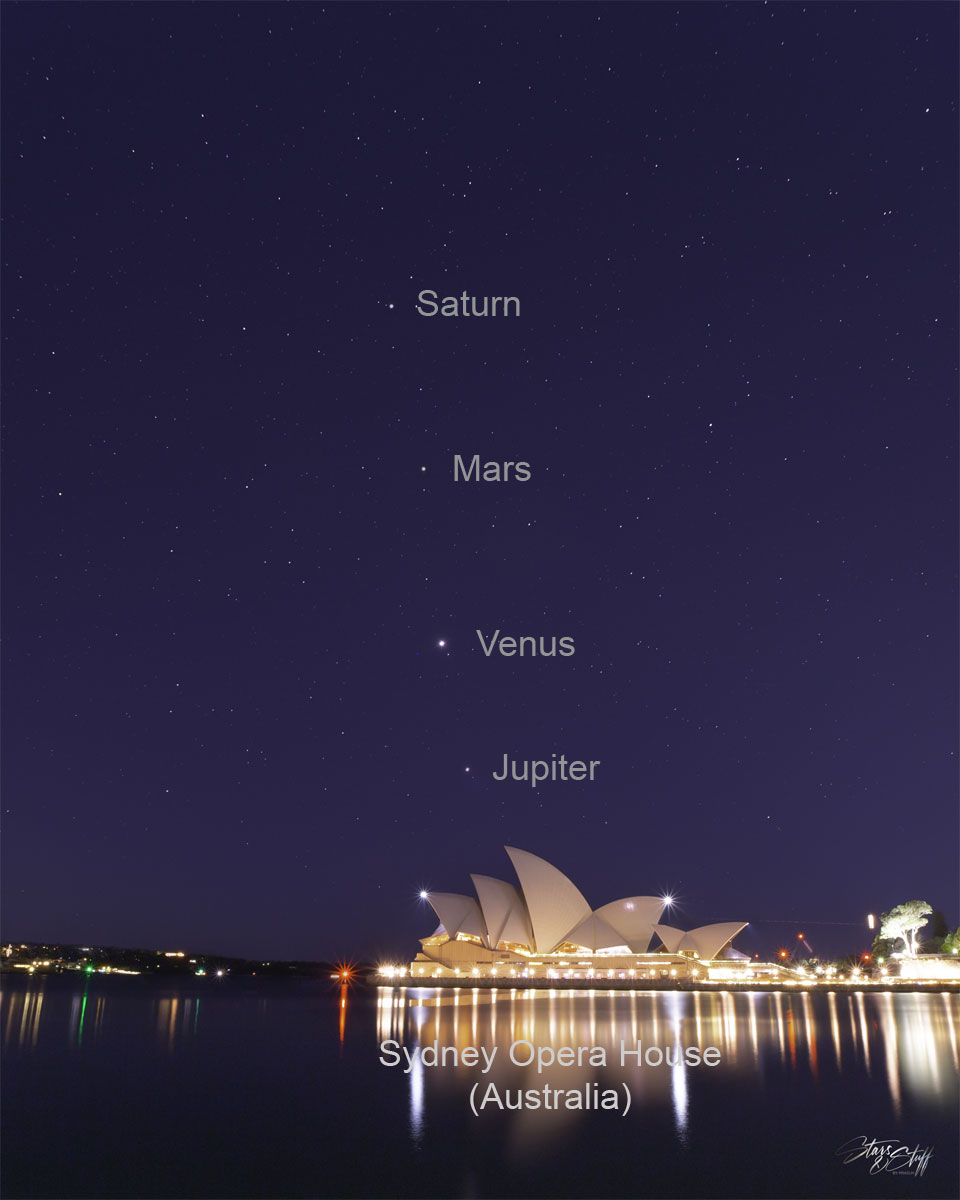
Planet Parade over Sydney Opera House
NASA APOD · Prasun Agrawal
Le texte de la NASA (anglais)
Look up this week and see a whole bunch of planets. Just after sunset, looking west (mostly), planets Mercury, Venus, Saturn, and Jupiter will all be visible to the unaided eye simultaneously. If you have a telescope, planets Uranus and Neptune can also be seen. In order up from the horizon, the lineup this week will be Venus (the brightest), Mercury, Saturn, Neptune, Uranus, and Jupiter (second brightest). It doesn't matter where on Earth you live because this early evening planet parade will be visible through clear skies all around the globe. The planets will appear to be nearly in a line because they all orbit the Sun in nearly the same plane: the ecliptic. The featured image shows a similar planet parade that occurred in 2022, captured over the Sydney Opera House in southern Australia. Although visible all week, the planets will be most easily seen together this weekend.
Lire sur apod.nasa.gov