Éphéméride Chaque jour a son histoire

Éphéméride astronomique du jour

Données astronomiques

Soleil
Lever
05:59
Coucher
21:53
Durée du jour 15h 53min (-1min 46s) Midi solaire 13:56 Crépuscule civil 05:20 — 22:32 Heure dorée 20:53 — 21:53
Lune
Dernier croissant — 13/07/2026
Dernier croissant
Illumination : 2%

Ciel à observer

En activité

Delta Aquarides

Pluie d'été discrète mais régulière, aux météores lents. Elle se mêle aux premières Perséides à la fin juillet.

Maximum attendu la nuit du 29 au 30 juillet · jusqu'à 25 météores par heure · radiant dans le Verseau, regarder vers le sud · poussières de la comète 96P/Machholz.
Prochain rendez-vous céleste : Maximum des Perséides, le 12 août (jusqu'à 100 météores par heure) — dans 30 jours

Image astronomique du jour

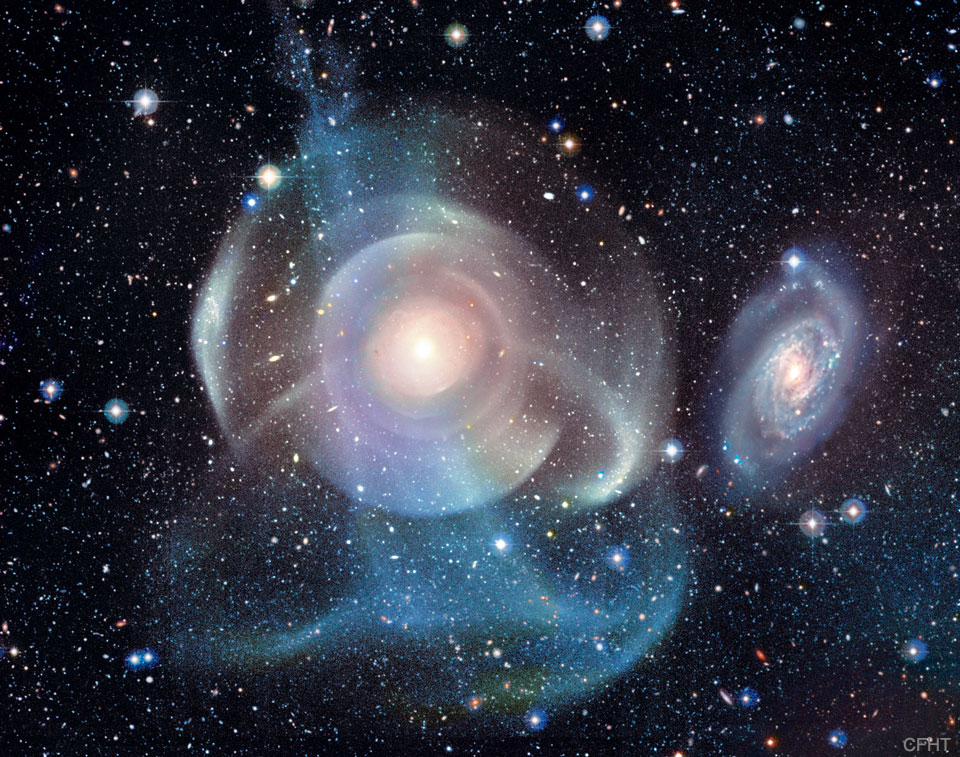
Galaxy NGC 474: Shells and Star Streams

Galaxy NGC 474: Shells and Star Streams

What's happening to galaxy NGC 474? The multiple layers of emission appear strangely complex given the relatively featureless appearance of the elliptical galaxy in less deep images. The cause of the shells is a topic of research, but they are possibly tidal tails related to debris left over from absorbing numerous small galaxies in the past billion years. Alternatively, the shells may be like ripples in a pond, where the ongoing collision with the spiral galaxy just to the right of NGC 474 is causing density waves to ripple through the galactic giant. Regardless of the actual cause, the featured image dramatically highlights the increasing evidence that the halos of some elliptical galaxies are surprisingly complicated. Similarly, the halo of our own Milky Way Galaxy is one example of such unexpected intricacies. NGC 474 spans about 250,000 light years and lies about 100 million light years distant toward the constellation of the Fish (Pisces).