Éphéméride Chaque jour a son histoire

Éphéméride astronomique du jour

Données astronomiques

Soleil
Lever
06:13
Coucher
21:41
Durée du jour 15h 27min (-2min 29s) Midi solaire 13:57 Crépuscule civil 05:36 — 22:17 Heure dorée 20:41 — 21:41
Lune
Gibbeuse croissante — 25/07/2026
Gibbeuse croissante
Illumination : 85%

Ciel à observer

En activité

Delta Aquarides

Pluie d'été discrète mais régulière, aux météores lents. Elle se mêle aux premières Perséides à la fin juillet.

Maximum attendu la nuit du 29 au 30 juillet · jusqu'à 25 météores par heure · radiant dans le Verseau, regarder vers le sud · poussières de la comète 96P/Machholz.
En activité

Perséides

Les célèbres « larmes de saint Laurent », la pluie d'étoiles filantes la plus observée de l'année, idéale par les chaudes nuits d'août.

Maximum attendu la nuit du 12 au 13 août · jusqu'à 100 météores par heure · radiant dans Persée, regarder vers le nord-est · poussières de la comète 109P/Swift-Tuttle.

Prochain rendez-vous céleste : Éclipse totale de Soleil, le 12 août — dans 18 jours

Image astronomique du jour

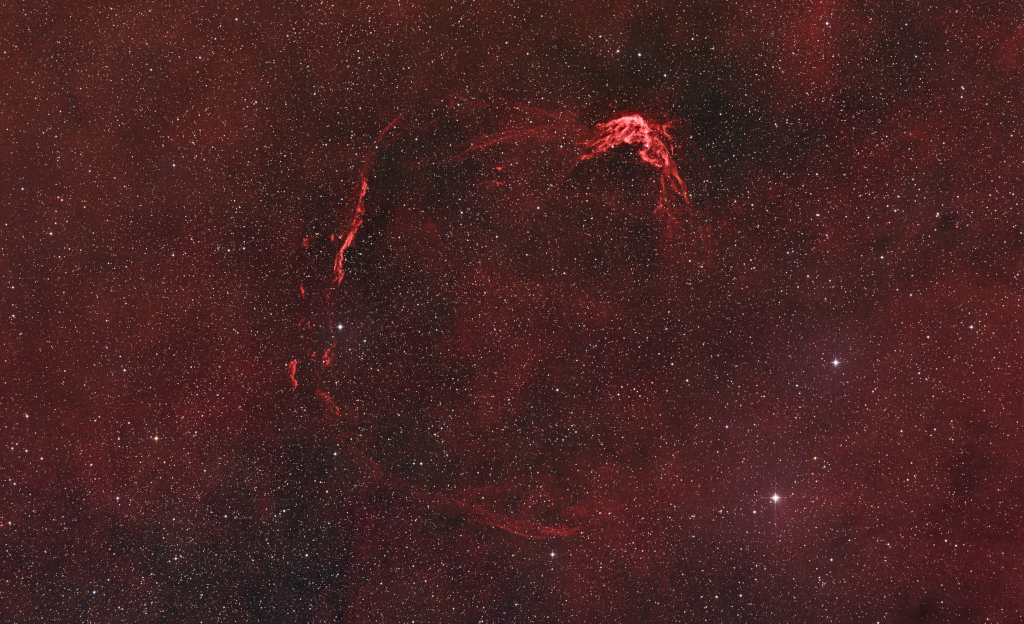
RCW 86: Historical Supernova Remnant

RCW 86: Historical Supernova Remnant

In 185 AD, Chinese astronomers recorded the appearance of a new star in the Nanmen asterism. That part of the sky is identified with part of the southern constellation Centaurus on modern star charts. In fact, the new star was reported to be visible to the naked-eye for months before it faded from view, and is now thought to be the earliest recorded supernova. In this 21st century telescopic image, the wispy outlines of a faint emission nebula recognized as the remnant of that historical stellar explosion can be traced against a starry background. The ragged but roughly circular extent of the nebula, cataloged as RCW 86, represents interstellar gas ionized by the supernova's still expanding shock wave. Space-based images indicate an abundance of the element iron in RCW 86 and the absence of a neutron star or pulsar within the remnant, suggesting that the original supernova was Type Ia. Unlike the core collapse supernova explosion of a massive star, a Type Ia supernova is a thermonuclear detonation on a white dwarf star that has accreted material from its companion in a binary star system. Near the plane of our Milky Way galaxy and larger than the full moon on the sky this supernova remnant is too faint to be seen by eye though. RCW 86 is some 8,000 light-years distant and around 100 light-years across.

Crédit : Chinese astronomers